Address
304 North Cardinal St.
Dorchester Center, MA 02124
Work Hours
Monday to Friday: 7AM - 7PM
Weekend: 10AM - 5PM

Address
304 North Cardinal St.
Dorchester Center, MA 02124
Work Hours
Monday to Friday: 7AM - 7PM
Weekend: 10AM - 5PM


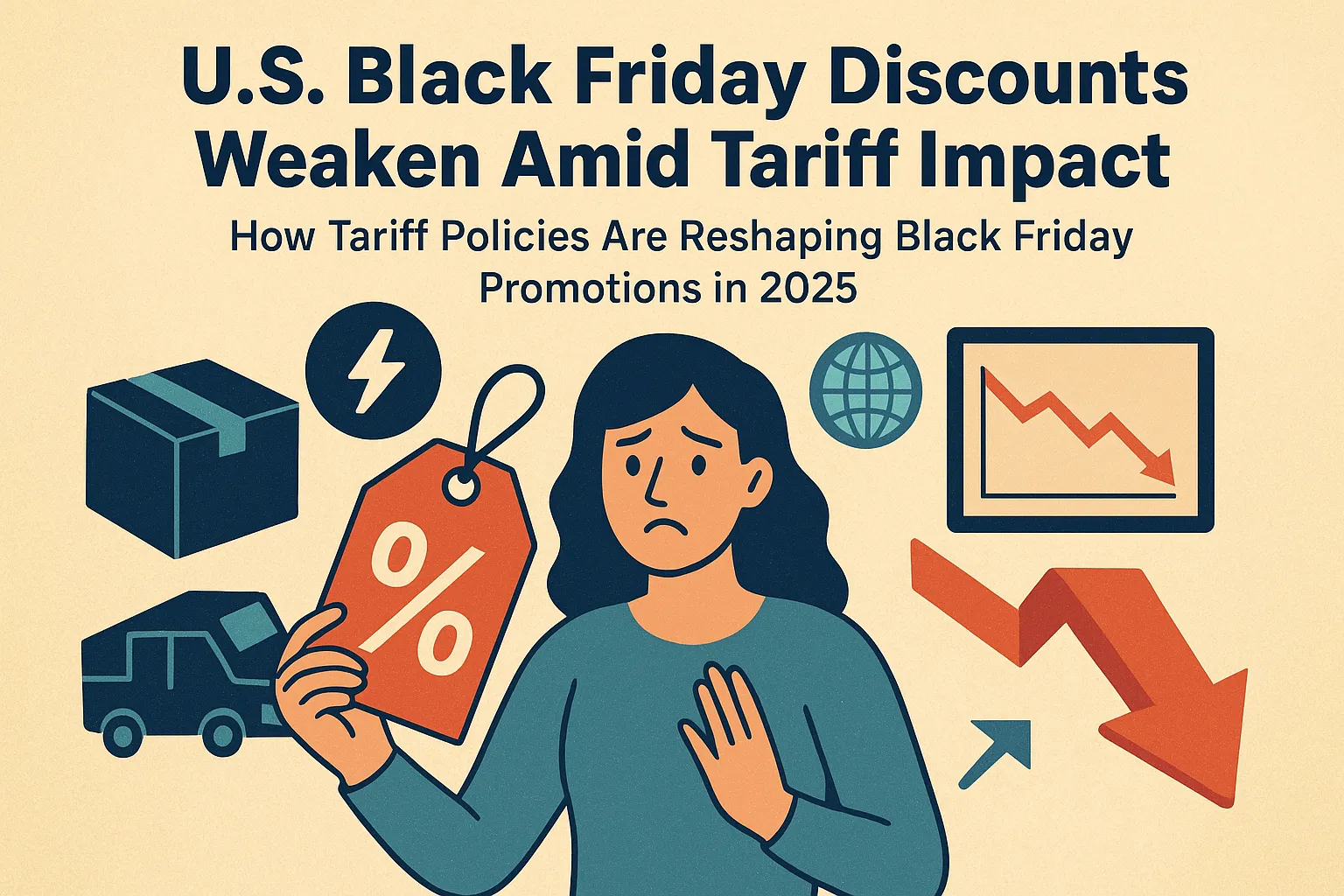
For years, Black Friday has been synonymous with deep discounts and record-breaking sales.
But the 2025 season is telling a different story: U.S. Black Friday discounts are notably weaker, as tariff policies and rising import costs reshape how brands plan promotions.
For Amazon sellers and eCommerce brands, this shift affects profit margins, consumer expectations, and pricing strategies across the entire Q4 cycle.
Throughout 2024–2025, the U.S. maintained or increased tariffs on imported materials and components — including metals, electronic parts, and textiles.
As a result, brands are facing significantly higher product costs.
For example, the cost of a copper spice stripper increased from $20 to $30 due to metal tariffs, making traditional “40% OFF” Black Friday promotions unprofitable.
Major global brands — such as Coach, Therabody, and Dyson — are responding by shifting from heavy markdowns to limited editions and value-added bundles to protect their margins.
Instead of offering 40–50% markdowns, many brands now promote 15–25% discounts paired with exclusive or limited-edition items to avoid long-term “discount fatigue” and maintain brand value.
Higher prices and reduced discounts lead to lower conversion rates — increasing CPA on performance-driven platforms like Amazon Ads and Meta.
To compensate, brands are investing more in:
Consumers remain cautious despite wage growth in some sectors.
Combined with tariff-driven costs, brands must carefully balance profitability and sales volume.
Sellers sourcing from China or Southeast Asia face higher landed costs and smaller promotional margins. Many are adapting by:
While electronics and fashion are heavily impacted, niche segments can benefit — especially:
H3 – Shift Toward Value-Based Messaging
eCommerce listings increasingly emphasize:
rather than “cheap” or “discount.”
Spread smaller promotions throughout Cyber Week and the holiday season instead of focusing solely on Black Friday.
Consider alternative suppliers, nearshoring, or freight forwarders offering duty optimization programs.
Add-ons such as free accessories, extended warranties, and premium packaging boost value without sacrificing margins.
Consumers respond strongly to authentic stories.
Use A+ content, product videos, and social media to communicate brand mission, craftsmanship, or sustainability.
Early Q4 2025 data shows the average U.S. discount rate has dropped 15–20% year over year.
Expect:
Premium and light luxury brands will rely more on exclusivity rather than aggressive discounts.
Weaker Black Friday discounts reflect deeper shifts in trade policy, cost structures, and consumer behavior.
To stay competitive, Amazon sellers and eCommerce brands should:
Adapting early will be essential for success throughout the 2025 holiday season.
Q1: Why are U.S. Black Friday discounts weaker in 2025?
Tariffs have increased import and material costs, reducing brands’ ability to offer deep discounts.
Q2: Which industries are most affected?
Metals, electronics, and home goods are among the most impacted categories.
Q3: How can Amazon sellers stay competitive?
Shift toward value-driven offers, strengthen storytelling, and explore tariff-free or local suppliers.
